There is a lot of jargon in this space. Hydrozoning, greywater, microclimate design. Underneath the terminology these are all simple ideas, and most of them have been used in desert agriculture for a very long time.
Here is each one in plain language, in the order you would generally think about them.
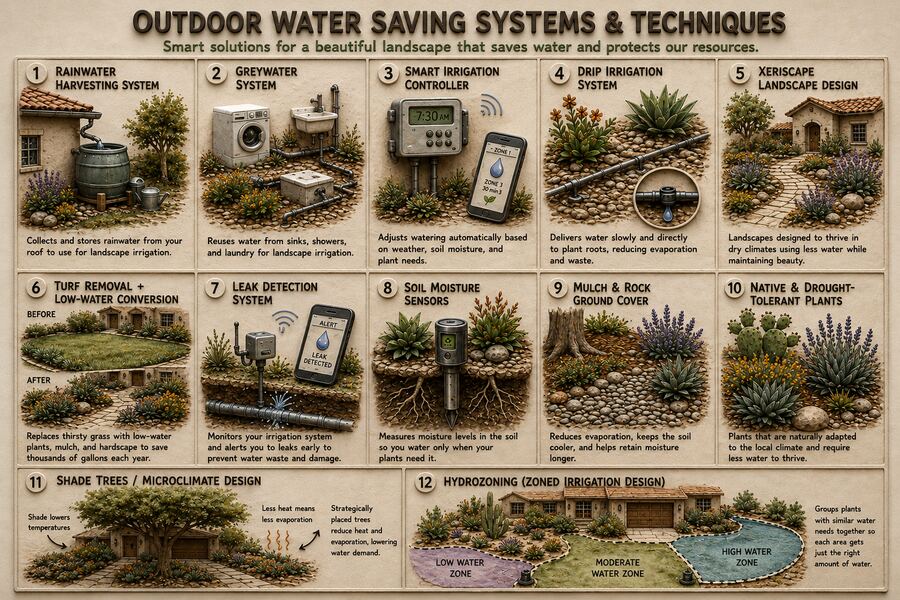
1 Rainwater Harvesting System
Collects and stores rainwater from your roof to use for landscape irrigation. It's free water falling from the sky, so why let it just run down the driveway?
Tucson Water rebate: up to $2,000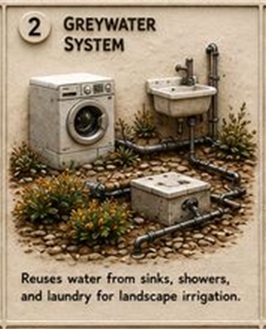
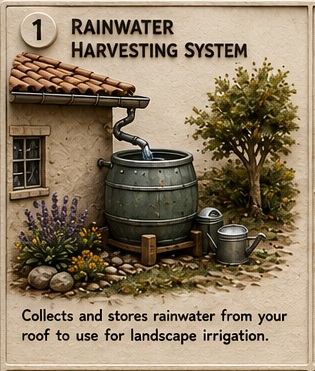
2 Greywater System
Reuses water from sinks, showers, and laundry for landscape irrigation. Your washing machine is already paying for water once, this gets a second use out of it before it disappears down the drain.
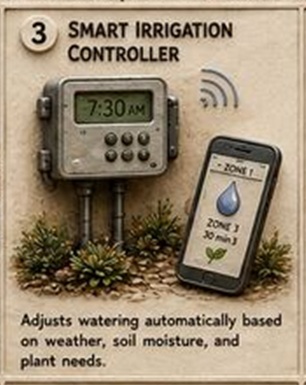
3 Smart Irrigation Controller
Adjusts watering automatically based on weather, soil moisture, and plant needs. It's the difference between a sprinkler that runs on a dumb timer and one that actually knows it rained yesterday.
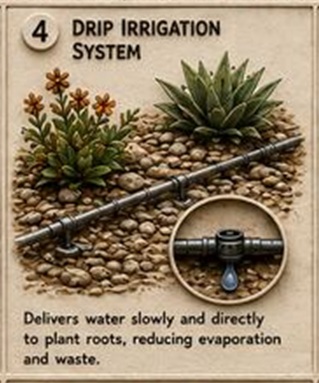
4 Drip Irrigation System
Delivers water slowly and directly to plant roots, reducing evaporation and waste. Less water hitting concrete and sidewalks, more of it actually reaching the roots that need it.
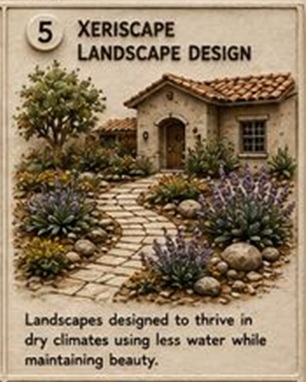
5 Xeriscape Landscape Design
Landscapes designed to thrive in dry climates using less water while maintaining beauty. Desert plants were built for this heat long before we were, so let them do the work.
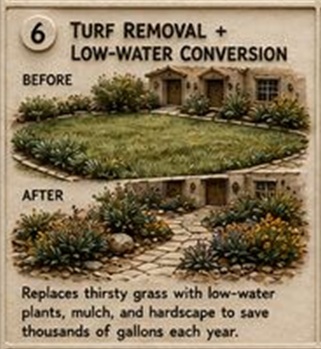
6 Turf Removal + Low-Water Conversion
Replaces thirsty grass with low-water plants, mulch, and hardscape to save thousands of gallons each year. Also usually the upgrade with the biggest rebate attached to it.
Tucson Water rebate: paid per sq ft removed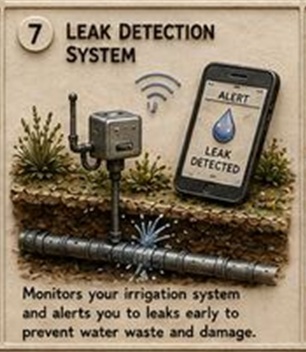
7 Leak Detection System
Monitors your irrigation system and alerts you to leaks early to prevent water waste and damage. Catches the slow drip before it becomes the surprise water bill.
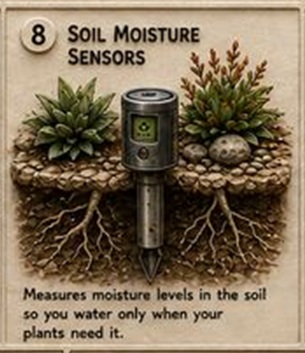
8 Soil Moisture Sensors
Measures moisture levels in the soil so you water only when your plants actually need it. No more guessing games or watering out of habit.
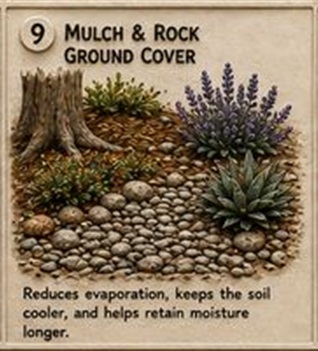
9 Mulch & Rock Ground Cover
Reduces evaporation, keeps the soil cooler, and helps retain moisture longer. Simple, cheap, and it makes the yard look sharper too.
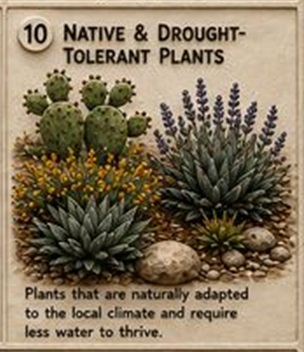
10 Native & Drought-Tolerant Plants
Plants that are naturally adapted to the local climate and require less water to thrive. They were already built for Tucson, we're just catching up to them.
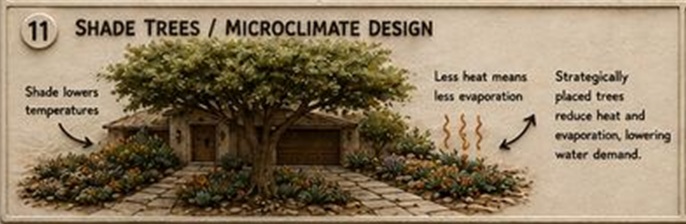
11 Shade Trees / Microclimate Design
Shade lowers temperatures, and strategically placed trees reduce heat and evaporation, lowering water demand. A good tree is basically a free air conditioner for your yard.
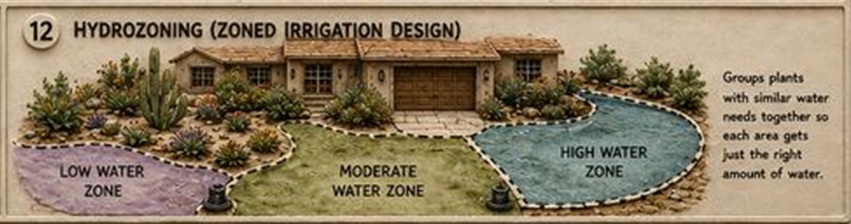
12 Hydrozoning (Zoned Irrigation Design)
Groups plants with similar water needs together so each area gets just the right amount of water. No more high water plants and low water plants fighting over the same sprinkler zone.
Not Sure Which of These Your Yard Needs?
Answer a few questions and get an instant estimate of your water waste and potential savings, free. Or skip ahead and we'll match you with a vetted local pro.
Assess My Home → Get Matched Free →How They Fit Together
These twelve are not twelve separate purchases. They stack into three layers, and thinking about them that way makes the sequencing obvious:
- Reduce demand (5, 6, 9, 10, 11) — change what you are watering so it needs less. Biggest permanent savings.
- Deliver precisely (3, 4, 8, 12) — get the remaining water exactly where it needs to go. Fastest payback.
- Capture and protect (1, 2, 7) — use water you already have, and stop losing it to leaks.
If you are starting from zero, the honest order is: find the leaks, fix the controls, then redesign the planting. People often do it backwards, spending on a beautiful xeriscape that is still watered by a twenty-year-old timer.
The Three Indoor Ones We Left Out
This list is outdoor-only. Tankless water heaters, high-efficiency fixtures, and permeable pavers round out the full picture, and they are covered in the 15-upgrade breakdown.